

How to Choose an Engagement Ring for Your October Proposal


October's upon us, and a lot of people in Chattanooga think this gorgeous time of year is perfect to make a surprise October proposal. Before you pop the question to your beloved, you should make sure they get the right engagement ring.
Sense and Style: What's Yours?
Do you and your significant other prefer old-fashioned sophistication in your jewelry? Or do you prefer a more modern, minimalist style? Make sure you know what you both like before heading to the jewelry store. If you already have a lot of jewelry, review your collection. It'll give you an idea of the metal bands you prefer, the scale of the jewelry and your preferred level of detail.
Don't forget the role your lifestyle will play. If you work with your hands a lot, a simple design and a more durable band will be your best friends.
The Four Cs and More
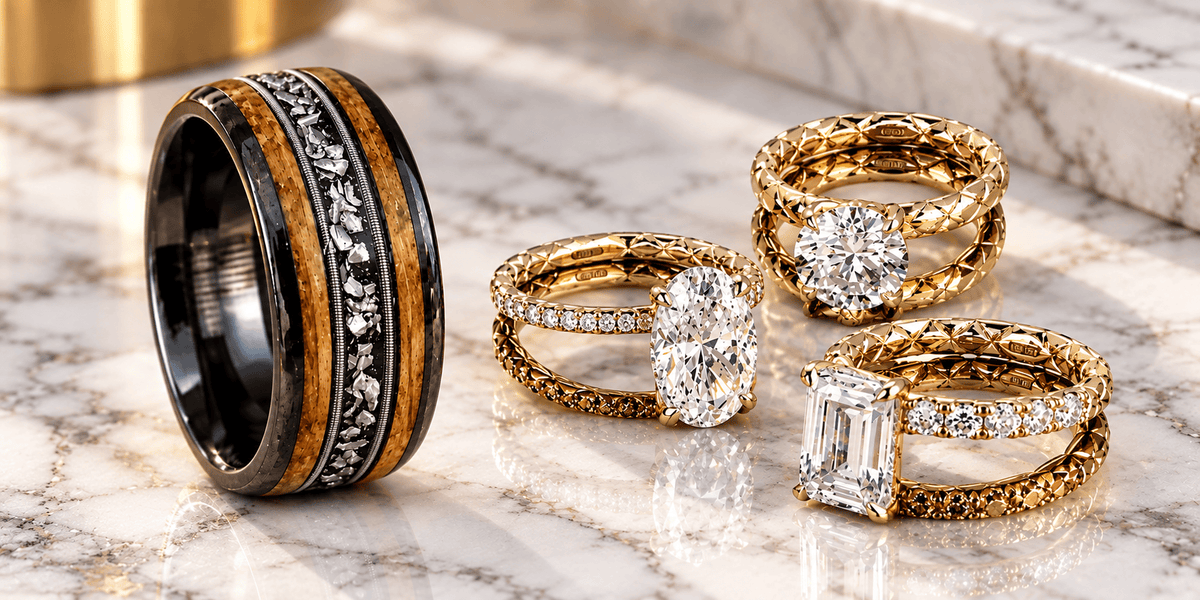
Cut, carat, clarity and color. These four Cs are your guide to finding the right ring. One advantage of lab-grown rings is that you'll have better luck choosing your cut than you would with natural diamonds. Classic round cuts are still the most popular among jewelry lovers, but pear and princess cuts are also fantastic options.
As for carats, those are used to measure a gemstone's weight, so the higher the number of carats, the larger the diamond will be. Lifestyle and finger size are as important in finding the right size as your budget. Clarity refers to the number of visible flaws in the stone. Since lab-grown diamonds are grown in controlled conditions, you'll have a far better chance of finding a diamond with a high clarity rating.
Finally, the color of your diamond matters, too. Lab-grown diamonds come in the same colors as natural diamonds, but you'll also find labs producing pinks and greens. If you have a favorite color, see if your jewelry store has lab-grown gems that match.
Bands and Settings
While traditional yellow gold bands are still the standard for engagement rings, there are other options. Rose gold, for example, appeals to the more vintage-minded, and its pinkish hue matches many skin tones. Platinum is more expensive, but its white sheen and durability make it a great choice.
As for your gem settings, most rings use the classic prong setting, where metal prongs secure the gem in place. A four-prong setting looks good, but it's delicate. A six-prong setting is best if you use your hands a lot. Alternatively, you could choose something with a pavé setting. This is where small diamonds are closely set along the band, so the ring has a continuous sparkle. You could also choose a flush setting, where the diamond is set directly atop the band itself.
Don't Forget to Communicate
It's romantic to give your partner a surprise, but it's also a good idea to talk to your partner about what they want in an engagement ring. If a friend or acquaintance recently got engaged, use that as an opportunity to see what your significant other prefers in jewelry. Window shopping, either in-person or online, is a tried-and-true method for figuring out what your partner likes in rings. If they provide you with subtle hints, listen and learn.
Don't Forget Your Wallet
Despite what many people suggest, you don't need to spend a certain percentage of your annual income on an engagement ring. Saving up isn't a bad idea, but you should set a realistic budget and look at engagement rings within that range. If you care about ethical sourcing, then ask your jeweler about the origin of the diamonds and metals. Lab diamonds don't come from war-torn countries, and they're affordable to boot.